


How Do Carbon Monoxide Detectors Work? A Guide to Home CO Safety


Carbon monoxide is one of the most difficult household hazards to detect without the right equipment. You can't see it, smell it, or taste it, which is why carbon monoxide detectors play such an important role in home safety.
Whether you live in a house, apartment, or RV, understanding where carbon monoxide comes from and how CO detectors work can help you create a safer environment for your family.
In this guide, we'll explain how carbon monoxide detectors work, where they should be placed, how often they should be tested, and what to do if an alarm sounds.
What Is Carbon Monoxide?
Carbon monoxide, commonly called CO, is a colorless and odorless gas produced when fuels don't burn completely.
Because people cannot reliably detect carbon monoxide with their senses, dangerous levels can build up without an obvious warning. A carbon monoxide detector is designed to monitor for CO and alert you when potentially dangerous conditions are detected.
Where Does Carbon Monoxide Come From?
Carbon monoxide can be produced by fuel-burning appliances, equipment, and vehicles.
Potential sources around a home can include:
Furnaces
Gas water heaters
Fireplaces
Gas stoves and ovens
Fuel-burning space heaters
Generators
Grills
Vehicles running in or near an attached garage
Proper installation, ventilation, and maintenance of fuel-burning equipment are important parts of reducing CO risks.
A CO detector provides another important layer of protection by helping alert
occupants when carbon monoxide is detected.
How Do CO Detectors Work for Home Safety?

Carbon monoxide detectors monitor the surrounding air for the presence of carbon monoxide, an invisible and odorless gas that can be dangerous at elevated concentrations.
When a detector senses CO at levels and durations that meet its alarm thresholds, it sounds an alert so occupants can respond to the potential hazard.
Unlike smoke alarms, which are designed primarily to detect signs of a fire, CO detectors specifically monitor for carbon monoxide.
Some modern home safety detectors can monitor for additional gases or provide other information, depending on the device.
How Does a CO Detector Detect Carbon Monoxide?
Carbon monoxide detectors use sensors designed to respond to CO in the surrounding air.
One common type is an electrochemical sensor. When carbon monoxide reaches the sensor, it creates a chemical reaction that produces an electrical signal. The detector uses this signal to determine the presence and concentration of CO.
The detector continuously monitors its sensor and triggers an alarm according to its designed thresholds.
Different detectors can use different technologies and features, so always follow the manufacturer's instructions for your specific device.
Where Should Carbon Monoxide Detectors Be Placed?
Correct placement is an important part of getting the protection your CO detectors are designed to provide.
As a general rule, CO alarms should be installed according to the manufacturer's instructions and applicable local requirements. Common recommendations include placing alarms outside sleeping areas and on levels of a home where protection is needed.
Avoid simply choosing a location based on convenience. The manufacturer's instructions should explain appropriate mounting locations and areas that could interfere with accurate operation.
Local building and fire codes can also have specific requirements for CO alarm placement.
How Many CO Detectors Should a Home Have?
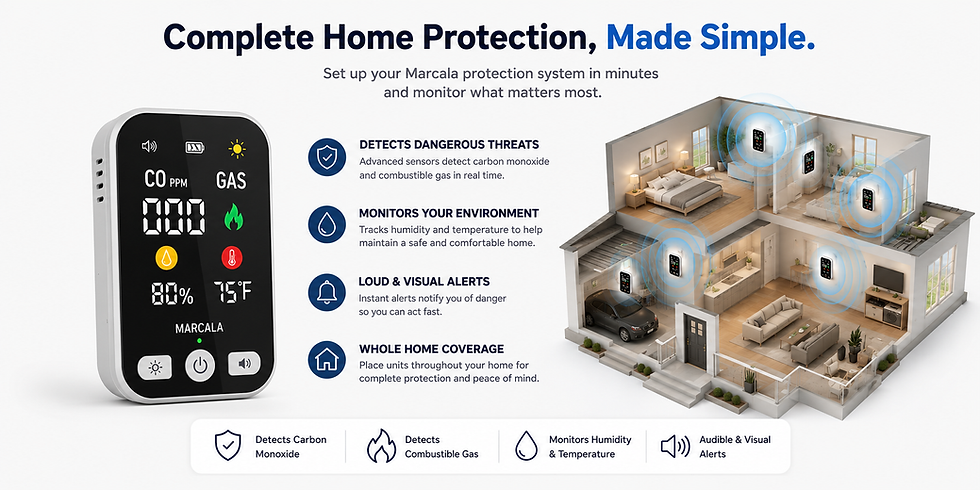
The appropriate number depends on the size and layout of your home, sleeping areas, fuel-burning equipment, and applicable local requirements.
A larger multi-level home may require several detectors to provide appropriate coverage.
Instead of relying on one detector for an entire house, review the manufacturer's placement instructions and local requirements to determine how many alarms are appropriate for your home.
How Often Should You Test a CO Detector?
CO detectors should be tested regularly according to the manufacturer's instructions.
Most units include a test button that allows you to verify that the alarm and basic electronics are operating.
Testing the alarm, however, doesn't necessarily test every aspect of the sensing element. That's why it's also important to follow the manufacturer's recommendations regarding maintenance and replacement.
Consider making detector checks part of your regular home-safety routine.
When Should a CO Detector Be Replaced?
Carbon monoxide detectors don't last forever.
Sensors and other components can have a limited service life, which varies by manufacturer and model. Check your detector for a replacement date or review the manufacturer's instructions to determine its recommended service life.
You should also investigate a detector that is damaged, malfunctioning, displaying an end-of-life warning, or otherwise failing to operate as intended.
Never assume that an old detector is still providing reliable protection simply because it powers on.
CO Detector vs. Gas Detector: What's the Difference?
A carbon monoxide detector and a combustible gas detector are not necessarily the same thing.
A CO detector is specifically designed to detect carbon monoxide.
A gas detector may be designed to detect other gases, such as natural gas or propane, depending on the device.
Some multi-function detectors can monitor for more than one potential hazard. If you're considering one of these products, check exactly which gases the device is designed to detect rather than assuming that one sensor detects everything.
What Should You Do if Your CO Alarm Sounds?
Never ignore a carbon monoxide alarm.
If a CO alarm sounds, follow the detector manufacturer's emergency instructions and guidance from local emergency authorities. Move to fresh air when instructed and contact emergency services or the appropriate authorities.
Do not assume an alarm is false simply because you can't smell or see anything—carbon monoxide is odorless and invisible.
If anyone is experiencing symptoms that could be associated with carbon monoxide exposure, seek emergency medical assistance.
Do not return to an affected area until appropriate authorities indicate that it is safe to do so.
Where Can I Buy a CO Detector for Home Safety?
Carbon monoxide detectors are widely available online, but it's important to choose a detector appropriate for your home's needs and understand exactly which hazards it is designed to monitor.
Marcala offers home safety detection solutions online for customers throughout the United States. When choosing a detector, consider its detection capabilities, alarm features, display, power requirements, placement recommendations, and instructions for use.
Marcala products are also backed by our lifetime warranty, giving customers additional confidence in the safety products they choose for their home.
Building a Safer Home
A carbon monoxide detector is an important part of home safety, but it shouldn't be your only precaution.
Regularly maintain fuel-burning appliances, follow safe generator and grilling practices, maintain appropriate ventilation, and make sure everyone in your household understands what to do if a safety alarm sounds.
Most importantly, don't wait for a problem to start thinking about carbon monoxide.
A few simple precautions, including properly placed and maintained CO detectors, can help you and your family stay better prepared for a hazard you otherwise may never see coming.

Comments